How to Identify Pure Desi Ghee
Learn practical, evidence-led ways to assess desi ghee through its label, source, storage and sensory characteristics; and when laboratory testing is the only reliable answer.

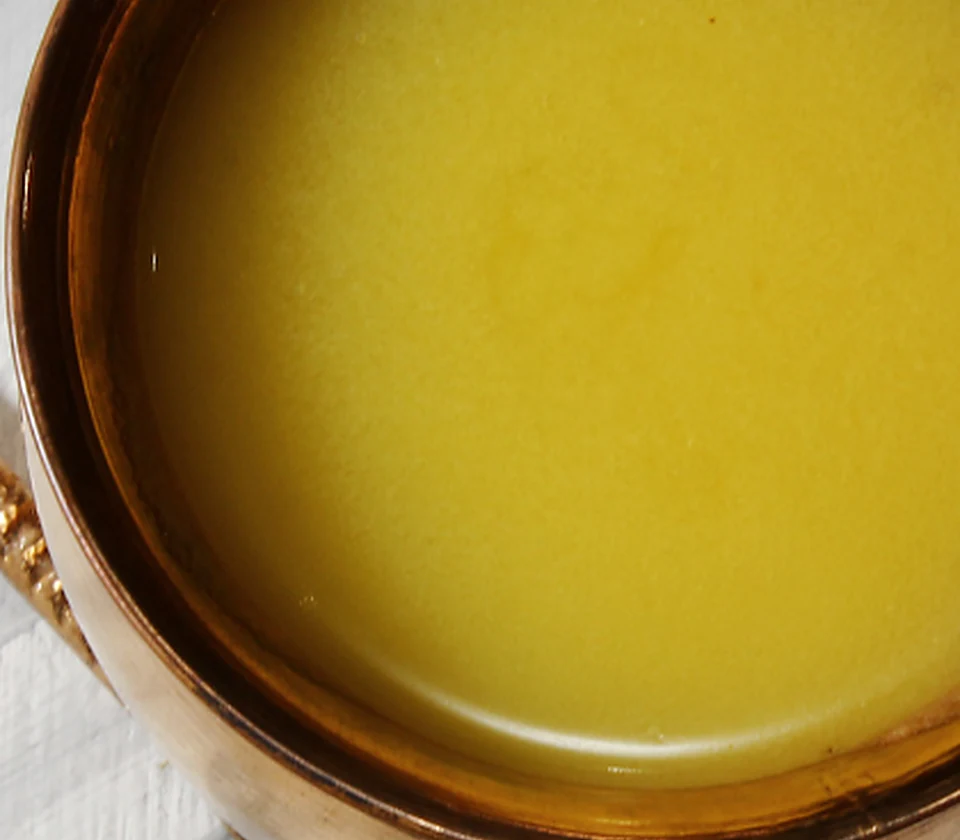
A jar of desi ghee can look, smell and behave differently from another jar without either one being impure. Temperature, the milk source, feed, season and traditional preparation all affect colour, graininess and aroma. The most useful approach is therefore not a viral kitchen test, but a combination of clear labelling, a traceable seller, sensible sensory checks and careful storage. Where a definite answer is required, only an appropriately accredited laboratory test can establish composition.
Start with what ghee is
Ghee is a milkfat product made from milk, cream or butter by removing almost all water and non-fat milk solids. Codex defines it as a product obtained exclusively from those dairy ingredients, with its characteristic flavour and physical structure. That definition matters because it separates ghee from blends made with vegetable fats, flavourings or other substitutes. A label should identify the product plainly and list ingredients in a way that matches what is being sold.
For a shopper, “pure” should mean more than a golden colour or a strong smell. Look for a complete ingredient list, a batch or lot reference, a best-before date, storage instructions and a way to contact the producer or seller. These details do not prove chemistry on their own, but they make the product accountable. A vague label, a missing batch reference or a seller who cannot explain the product’s source is a reason to ask more questions before buying.
It is also worth separating culinary tradition from medical claims. Ghee is an energy-dense dairy fat and contains saturated fat, so it is best treated as one cooking fat within an overall eating pattern rather than as a cure-all. People with an allergy to milk should read the label and seek suitable professional advice; clarification reduces milk solids but is not a substitute for allergy guidance.
Use the label and seller as the first checks
The most dependable consumer checks happen before the jar is opened. Choose a seller that names the product, provides a pack size and batch details, and has a clear customer-contact route. For online shopping, compare the product name, pack size and price on the checkout page with the information supplied by the seller. Keep the receipt and take a picture of the label when you receive the order; this is useful if you need to report a problem.
An ingredient list is especially important. If the product is sold as traditional desi ghee, the list should not quietly introduce unrelated fats. Vegetable oil, vanaspati, palm-based shortening, added colour or flavour should be declared if present. The absence of unusual ingredients is a good sign of a straightforward product, but it is not a laboratory certificate. Legitimate packaging can still require quality control behind the scenes.
Ask direct, practical questions: Is this made from butter, cream or milk? Is it packed in batches? What storage guidance applies after opening? How should a customer report a damaged or leaking jar? A responsible seller should be able to answer these without making extravagant promises. For Aagan products, current pack options and availability are maintained in the live store, while the product page explains storage and typical use.
Understand normal changes in colour, aroma and texture
There is no universal “correct” colour for ghee. It can range from pale cream to deeper yellow, depending on factors such as the source of the milk and natural variation in the raw material. A lighter jar is not automatically diluted, and a darker jar is not automatically superior. Colour is a clue to examine alongside the label, aroma and seller information; not a verdict by itself.
Texture changes with temperature. Ghee may be liquid in a warm kitchen, firm in cooler weather, or grainy after repeated warming and cooling. These physical changes can be normal. Graininess in particular is often a result of how milkfat crystals form as the product cools. It does not, on its own, prove that a jar has been mixed with another fat.
Fresh ghee should have a clean dairy aroma and a familiar cooked-butter or nutty note appropriate to its style. A sharp rancid smell, obvious mould, an unusually swollen lid, visible moisture where it should not be, or a damaged seal are different matters. Do not taste a product that appears spoiled or contaminated. Photograph the issue, retain the pack and contact the seller promptly.
Why home purity tests are not definitive
Many home tests claim to expose adulteration by melting, freezing, heating or observing a flame. They can be entertaining demonstrations of how fats behave, but they are not reliable authentication methods. Different genuine ghees can melt, set and smell differently because natural dairy fat is variable. A result from a home experiment may create suspicion, but it cannot identify the ingredients of a complex blend or rule out adulteration.
Food laboratories use validated methods that measure properties such as fatty-acid profile and other compositional markers. Those methods require calibrated equipment, controlled procedures and trained interpretation. That is why an official investigation, a regulatory complaint or a high-stakes supply decision should rely on the relevant food authority or an accredited laboratory; not an internet shortcut.
For everyday households, the practical response is proportionate: buy from a transparent source, inspect the pack at delivery, store it correctly and report genuine quality concerns quickly. This protects both customers and honest small-batch producers better than treating every normal change in texture as proof of a problem.
Store ghee in a way that protects quality
Keep ghee tightly closed in a cool, dry place away from direct sunlight and the heat of the stove. The most common avoidable problem is introducing water with a wet spoon. Use a clean, dry utensil each time and close the lid promptly. This helps keep the product free from moisture and kitchen odours.
Refrigeration is not normally required for a stable, properly packed ghee, although it will make the fat firmer. If your kitchen is very warm, follow the pack guidance and keep the jar away from heat. Avoid repeatedly heating the whole jar; take out the amount needed for cooking instead. If you notice an off smell, contamination or a seal failure, stop using the product and contact the seller.
Finally, buy a size that fits your household’s pace of use. Smaller packs can be a sensible choice for an occasional cook, while larger packs may suit families that use ghee regularly. The best measure is not whether the jar stays perfectly liquid or perfectly golden, but whether it comes from a traceable source and remains clean, properly stored and pleasant to use.
Make a sensible purchase decision
Price can be a prompt to investigate, but it is not a purity meter. Production yield, milk source, packaging, delivery, retailer margins and batch size all affect the final price. A very low price for a product presented as premium dairy ghee can justify questions about ingredients and sourcing, but a high price does not independently prove quality either. Compare like with like: pack size, source information, date marking and the seller’s service all matter.
The most useful record is a simple one. Note where and when you bought the product, keep the invoice, and retain the batch reference until you have used the jar. This helps a seller trace a genuine issue and makes it easier to distinguish a storage problem after delivery from a product fault at packing. It also encourages a more informed buying decision than judging a product from a short video or a single appearance cue.
If you are buying ghee for a specific dietary reason, do not infer suitability from the word “pure” alone. Read the ingredients and allergen information, consider the serving amount used in the recipe, and obtain individual advice where needed. Clear information is more valuable than a dramatic purity promise.
When to ask for help
Contact the seller promptly if a jar arrives leaking, unsealed, visibly contaminated or with an odour that suggests spoilage. Describe what you observed, include the order and batch details, and provide clear photographs of the jar, label and packaging. Do not throw the product away until the seller has advised you, unless it presents an immediate food-safety concern.
For a suspected regulatory or compositional problem, use the appropriate local food-authority channel and provide the same evidence. A retailer can resolve delivery or service issues, while an accredited test or regulator is the route for a definitive composition finding. Keeping those roles separate makes complaints clearer and avoids presenting a kitchen observation as scientific proof.
Aagan Foods Editorial Team
We publish practical, carefully sourced information about traditional foods, cooking and storage. Our articles are educational and are not a substitute for personal medical or nutritional advice.