Cow Butter vs Buffalo Butter: What Is the Difference?
A practical comparison of cow butter and buffalo butter: colour, texture, flavour, cooking use, storage and nutrition context.

Cow butter and buffalo butter are both dairy butters, yet they often look and behave noticeably differently in the kitchen. The source animal changes the milk’s composition, while breed, feed, season and processing add further variation. That means a pale, firm buffalo butter and a yellower, softer cow butter can both be perfectly normal. The useful choice is the one that suits your recipe, taste and dietary context; not a blanket claim that one is always better.
Both are butter, but the milk starts differently
Butter is made by churning cream until the fat separates from the liquid portion, then working and packing the resulting butter. Cow and buffalo milk both contain the same broad groups of nutrients; fat, protein, lactose, minerals and water; but their proportions and fat characteristics are not identical. Studies consistently note that milk composition also changes within a species according to breed, stage of lactation, feed, climate and handling.
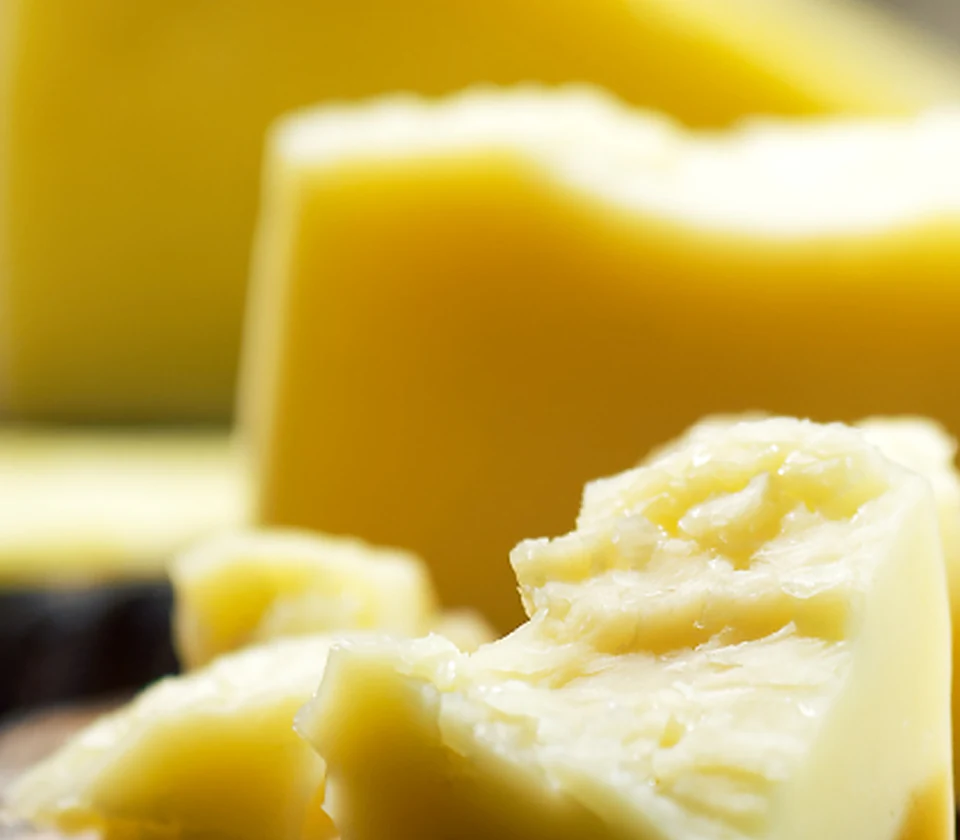
Buffalo milk generally contains more fat than typical cow milk, which is one reason it can give a higher butter yield from the same volume of milk. Its fat also tends to have a higher solid-fat content at a given temperature. In practical terms, buffalo butter often feels firmer and richer, especially in a cool kitchen. Cow butter can feel softer or spread more readily, though the exact result depends on the batch and how it has been stored.
These are cooking characteristics, not a purity test. A firm texture does not prove buffalo origin and a softer texture does not prove cow origin. Commercial blending, added water, salt, processing method and storage temperature can all change the final butter. For a particular product, the ingredient label and producer information remain more useful than appearance alone.
Why cow butter is often yellower
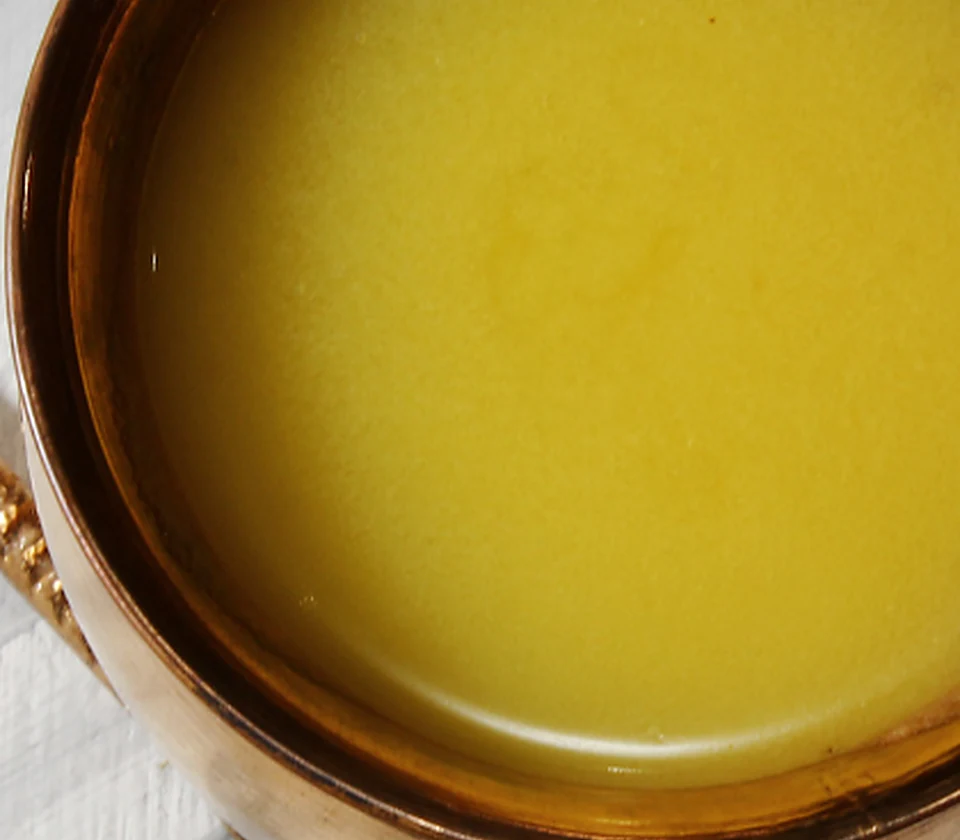
The familiar yellow tone of many cow butters is linked to carotenoids in the milk fat. Cows can pass some dietary carotenoids into milk, especially when feed contains more green forage. Buffalo milk is usually whiter because buffalo convert carotene to vitamin A more completely, leaving less carotene to colour the fat. This is a common and well-established explanation for the visual difference.
Colour remains variable. Cow butter can be pale, particularly when feed, season or processing differs, and buffalo butter is not necessarily stark white. Some commercial butters also use permitted colourings, so a bright yellow shade is not a reliable indicator of species or quality. Read the label rather than judging from colour alone.
For cooks, the colour difference can matter visually in baking, sauces and table use. It does not automatically translate into a meaningful nutritional advantage in a normal serving. Butter is still mainly a source of fat, and its nutritional role depends far more on portion size and the wider diet than on whether it is pale or golden.
Flavour, texture and cooking use
Cow butter is often described as creamy, lightly sweet or grassy, while buffalo butter can taste fuller and feel denser. These are useful kitchen descriptions rather than fixed rules. Culturing, salting, freshness and the preparation method can alter flavour as much as the animal source does. The most reliable way to choose is to try a small pack in the dishes you make most often.
For spreading, a softer butter may be convenient after a short rest at room temperature. For parathas, baking or everyday cooking, either can work when used according to the recipe. A firmer butter may hold its shape longer on a warm dish, while a softer butter may incorporate differently into batters. The distinction is usually about handling and preference, not a requirement to use one type for every recipe.
Do not confuse butter with ghee. Butter contains water and milk solids, while ghee is a milkfat product made by removing almost all of them. That difference affects flavour, storage and how each behaves under heat. If a recipe specifically calls for ghee, substituting butter can change browning and moisture.
Nutrition: compare the whole eating pattern
Both cow and buffalo butter are concentrated dairy fats and are energy dense. Their exact fat and fatty-acid profiles can vary from batch to batch. It is not responsible to claim that one source of butter is a universal health food, or that changing animal source alone will transform a diet. Individual needs can differ because of medical conditions, allergies and overall dietary pattern.
Mainstream heart-health guidance recommends limiting saturated fat and replacing some saturated fats with unsaturated fats where appropriate. That does not mean butter must disappear from every kitchen; it means that portion and frequency matter, and that a variety of fats can be useful in cooking. For personal dietary advice, especially where cholesterol or cardiovascular risk is a concern, consult a qualified healthcare professional.
If nutrition information is important to you, use the label for the exact product rather than relying on a general comparison. Salted and unsalted butters can differ in sodium, and serving sizes can make a large difference to daily intake. The practical choice is an honestly labelled butter that fits your recipe and is used in a sensible amount.
Buying and storing either butter
Choose butter from a seller that names the milk source where relevant, gives clear refrigeration instructions and provides batch information. At delivery, inspect the pack for damage, leakage and temperature abuse. Fresh dairy products are more perishable than shelf-stable ghee, so timely refrigeration matters.
Keep butter refrigerated in its original wrap or an airtight container. Use a clean utensil and avoid leaving the main pack near heat, strong-smelling foods or direct sunlight. If you need a small amount softened for spreading or baking, take out only what you need rather than repeatedly warming and chilling the whole pack.
Aagan Cow Butter is freshly churned in small batches and is intended for breakfast, baking, parathas and everyday cooking. As with any fresh dairy product, availability can vary. Check the live store for the current pack size and stock, and follow the freshness guidance printed on the pack after delivery.
Choosing for a recipe
For a recipe, start with the result you want. A butter that is easy to spread may be useful at breakfast; a firmer butter can be convenient when a recipe benefits from a more solid fat. In baking, weigh the butter and follow the temperature called for in the recipe, because melted, softened and chilled butter behave differently regardless of whether it comes from a cow or buffalo.
Taste is equally legitimate. Some households prefer the mellow, familiar profile of cow butter; others enjoy the fuller body often associated with buffalo butter. Neither preference needs to become a nutrition claim. If you are testing a new product, use it first in a simple dish where its flavour is easy to notice, then decide whether it works for your usual cooking.
Buying smaller quantities while comparing products can reduce waste. It also gives you a chance to assess packaging, freshness and how the butter performs in your own kitchen. Once you find a reliable product and a pack size that matches your rate of use, consistency becomes more useful than chasing a supposed perfect colour or texture.
Food safety and dietary considerations
Butter is a dairy product, so it is not appropriate for people with a milk allergy unless a qualified clinician has advised otherwise. Lactose intolerance and milk allergy are different issues; do not use a general internet claim about butter to make a personal health decision. Check the product label, especially if it contains salt, cultures or other ingredients, and seek professional guidance for individual dietary needs.
Keep an eye on condition rather than relying solely on the date. Visible mould, an unusually sour or rancid odour, a damaged package or prolonged warmth are reasons to stop using the product and contact the seller. Refrigeration slows quality loss, but clean handling and a sensible pack size are just as important for a fresh product.
Aagan Foods Editorial Team
We publish practical, carefully sourced information about traditional foods, cooking and storage. Our articles are educational and are not a substitute for personal medical or nutritional advice.